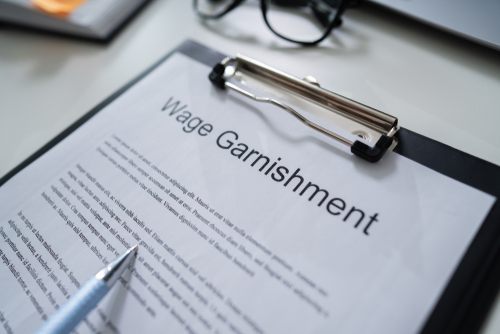
According to the United States Department of Labor’s Consumer Credit Protection Act (CCPA), wage garnishments are a complex legal process for employers to account for when it comes to employment matters. This article specifically refers to Title III of the Consumer Credit Protection Act.
Usually authorized through a court order, a wage garnishment directs an employer to withhold or garnish an employee’s wages for a certain amount or percentage to satisfy an outstanding debt. Wage garnishments also can be implemented for delinquent tax obligations and other debts owed to federal agencies of the U.S. federal government, as well as for state-level tax collectors.
Another consideration for Title III is that for a single debt, employees may not be fired; but if an employee’s earnings are garnished for two or more distinct debts, an employer has the discretion to involuntarily separate an employee from its business. This law also permits varying amounts and percentages of an employee’s “disposable earnings” that may be withheld.
The first step is determining how earnings are defined in the course of deciding the final wage garnishment calculation. Examples include but are not limited to retirement and pension payments to the employee, hourly wages, yearly salaries, commissions, bonuses, along with profit sharing, etc.
When it comes to lump-sum payments, the CCPA requires counting earnings that are for personal services but not including non-personal service-related lump-sum payment compensation as the first step when calculating the final wage garnishment.
Defining Disposable Earnings
The final amount able to be garnished is determined by the employee’s disposable earnings. This is defined as the earnings remaining once legally mandated deductions are factored into an employee’s earnings. Example deductions include local, federal, and state taxes, along with withholdings for unemployment, Medicare, and Social Security taxes. Voluntary deductions, such as health premiums, voluntary retirement plan contributions, etc., are not factored into the disposable earnings calculation.
When it comes to regular garnishment guidelines, which include non-support, bankruptcy, or tax-based requests, for both state and federal taxes, the maximum weekly amount is the smaller amount of either one-fourth of the worker’s disposable earnings or how much the worker’s disposable earnings exceed 30 times the U.S. minimum wage of $7.25 per hour x 30 hours = $217.50 (as of June 2023).
Looking at a weekly view, if disposable earnings are $217.50 or less, no garnishment can occur. If disposable earnings between $217.50 and up to $290 are considered, only $72.50 may be garnished, depending on how much the outstanding debt is in total. If the worker’s disposable earnings exceed $290 for a weekly pay period, up to one-fourth of the pay period’s disposable earnings can be considered to be garnished. It’s important to note that some bankruptcy court orders, state/federal tax debts, and court orders for child support and/or alimony are not necessarily subject to the garnishment ceilings discussed above.
While this information is not comprehensive for employers, it’s important to understand all the federal, state and local regulations to ensure compliance is achieved to reduce the chances for adherence complications.
Wage Garnishment Considerations for Business Owners
December 1, 2023 · Blog, General Business News
⏱ 3 min read
According to the United States Department of Labor’s Consumer Credit Protection Act (CCPA), wage garnishments are a complex legal process for employers to account for when it comes to employment matters. This article specifically refers to Title III of the Consumer Credit Protection Act.
Usually authorized through a court order, a wage garnishment directs an employer to withhold or garnish an employee’s wages for a certain amount or percentage to satisfy an outstanding debt. Wage garnishments also can be implemented for delinquent tax obligations and other debts owed to federal agencies of the U.S. federal government, as well as for state-level tax collectors.
Another consideration for Title III is that for a single debt, employees may not be fired; but if an employee’s earnings are garnished for two or more distinct debts, an employer has the discretion to involuntarily separate an employee from its business. This law also permits varying amounts and percentages of an employee’s “disposable earnings” that may be withheld.
The first step is determining how earnings are defined in the course of deciding the final wage garnishment calculation. Examples include but are not limited to retirement and pension payments to the employee, hourly wages, yearly salaries, commissions, bonuses, along with profit sharing, etc.
When it comes to lump-sum payments, the CCPA requires counting earnings that are for personal services but not including non-personal service-related lump-sum payment compensation as the first step when calculating the final wage garnishment.
Defining Disposable Earnings
The final amount able to be garnished is determined by the employee’s disposable earnings. This is defined as the earnings remaining once legally mandated deductions are factored into an employee’s earnings. Example deductions include local, federal, and state taxes, along with withholdings for unemployment, Medicare, and Social Security taxes. Voluntary deductions, such as health premiums, voluntary retirement plan contributions, etc., are not factored into the disposable earnings calculation.
When it comes to regular garnishment guidelines, which include non-support, bankruptcy, or tax-based requests, for both state and federal taxes, the maximum weekly amount is the smaller amount of either one-fourth of the worker’s disposable earnings or how much the worker’s disposable earnings exceed 30 times the U.S. minimum wage of $7.25 per hour x 30 hours = $217.50 (as of June 2023).
Looking at a weekly view, if disposable earnings are $217.50 or less, no garnishment can occur. If disposable earnings between $217.50 and up to $290 are considered, only $72.50 may be garnished, depending on how much the outstanding debt is in total. If the worker’s disposable earnings exceed $290 for a weekly pay period, up to one-fourth of the pay period’s disposable earnings can be considered to be garnished. It’s important to note that some bankruptcy court orders, state/federal tax debts, and court orders for child support and/or alimony are not necessarily subject to the garnishment ceilings discussed above.
While this information is not comprehensive for employers, it’s important to understand all the federal, state and local regulations to ensure compliance is achieved to reduce the chances for adherence complications.
Disclaimer
These articles provide general information on tax, accounting, and financial topics for small businesses and individuals. They are educational in nature and are not specific legal, accounting, financial, tax, or other professional advice, and should not be relied upon as such. This content was prepared by Service2Client and may have been reviewed or edited by the website owner for accuracy and compliance. Look for a trust mark below for verification details. No representation is made that any approach described will achieve a particular result, and no regulatory or professional body has reviewed or endorsed this content. Because each situation is different, readers should consult a qualified professional about their specific circumstances before acting. Images accompanying these articles are protected by copyright and may not be copied or reused.
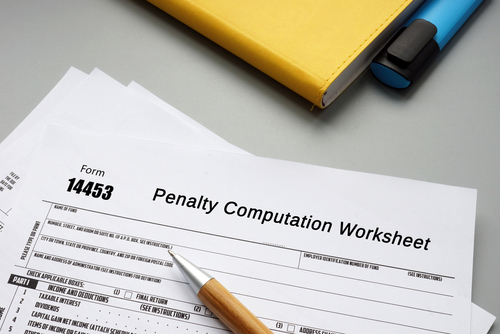
Every year, the IRS announces annual inflation adjustments related to tax rate schedules, deductions, cost-of-living adjustments, etc. What many taxpayers do not realize is that they also adjust the cost of fines and penalties as well. This means that the penalties for late filings and missing tax forms are getting more expensive. In this article, we will look at the penalties for failing to file various types of tax returns as well as failing to file certain types of forms.
Failure to File Penalties
There is simply no way around it: skipping out on filing a tax return is going to cost you. Each type of return has its own penalty associated with it. For returns to be filed in 2024, the failure to file penalties is as follows.
Income Tax Returns
Failure to file within 60 days of the due date, the minimum penalty is $510 (up from $485 in 2023) and can increase depending on the circumstances – up to 100 percent of the taxes on the return.
Partnership Return
Failure to file a partnership tax return incurs a $245 penalty (up from $235 in 2023).
S-Corporation Return
Failure to file an S-Corporation return incurs a $245 penalty (up from $235 in 2023).
Beyond these simple financial penalties, things can get serious depending on the length of time a return has not been filed and the amount of past due taxes. This includes liens, levies, and passport restrictions.
Passport Revocation or Denial
In cases of serious tax delinquency, defined as a tax debt of $62,000 or more in 2024, your application for a new passport can be revoked or denied renewal.
Liens
If a taxpayer fails to pay a properly assessed tax bill, the IRS can file a Notice of Federal Tax Lien. This type of lien puts creditors on notice that the federal government has a legitimate claim over your property. This means that when you sell any of your property or assets, you can be forced to send the proceeds to the IRS.
Levies
Levies are the legal seizure of your property. Typically, any property can be levied to fulfill a tax obligation. There are exceptions for certain small amounts of personal property, such as provisions, furniture, and other household personal effects, and business property needed to carry on a trade or business, but these are negligible thresholds (less than $12,000). Further, wages can be levied and are subject to a formula that calculates a maximum weekly amount.
In any case, a levy is the last resort of the IRS but is obviously something you want to avoid.
Conclusion
Paying penalties is no fun, and no one wants to pay them. You may feel overwhelmed due to personal or business circumstances or other reasons, but the absolute worst thing you can do is to ignore your tax filing obligations. Even if you are late, the sooner you file versus burying your head like an ostrich, the better – as it’s “better late than never” when it comes to the IRS.
The main lesson is that ignoring things won’t make them better.
Updated IRS 2024 Penalties for Late Filing and Missed Tax Forms
December 1, 2023 · Blog, Guest Article of the Month
⏱ 3 min read
Every year, the IRS announces annual inflation adjustments related to tax rate schedules, deductions, cost-of-living adjustments, etc. What many taxpayers do not realize is that they also adjust the cost of fines and penalties as well. This means that the penalties for late filings and missing tax forms are getting more expensive. In this article, we will look at the penalties for failing to file various types of tax returns as well as failing to file certain types of forms.
Failure to File Penalties
There is simply no way around it: skipping out on filing a tax return is going to cost you. Each type of return has its own penalty associated with it. For returns to be filed in 2024, the failure to file penalties is as follows.
Income Tax Returns
Failure to file within 60 days of the due date, the minimum penalty is $510 (up from $485 in 2023) and can increase depending on the circumstances – up to 100 percent of the taxes on the return.
Partnership Return
Failure to file a partnership tax return incurs a $245 penalty (up from $235 in 2023).
S-Corporation Return
Failure to file an S-Corporation return incurs a $245 penalty (up from $235 in 2023).
Beyond these simple financial penalties, things can get serious depending on the length of time a return has not been filed and the amount of past due taxes. This includes liens, levies, and passport restrictions.
Passport Revocation or Denial
In cases of serious tax delinquency, defined as a tax debt of $62,000 or more in 2024, your application for a new passport can be revoked or denied renewal.
Liens
If a taxpayer fails to pay a properly assessed tax bill, the IRS can file a Notice of Federal Tax Lien. This type of lien puts creditors on notice that the federal government has a legitimate claim over your property. This means that when you sell any of your property or assets, you can be forced to send the proceeds to the IRS.
Levies
Levies are the legal seizure of your property. Typically, any property can be levied to fulfill a tax obligation. There are exceptions for certain small amounts of personal property, such as provisions, furniture, and other household personal effects, and business property needed to carry on a trade or business, but these are negligible thresholds (less than $12,000). Further, wages can be levied and are subject to a formula that calculates a maximum weekly amount.
In any case, a levy is the last resort of the IRS but is obviously something you want to avoid.
Conclusion
Paying penalties is no fun, and no one wants to pay them. You may feel overwhelmed due to personal or business circumstances or other reasons, but the absolute worst thing you can do is to ignore your tax filing obligations. Even if you are late, the sooner you file versus burying your head like an ostrich, the better – as it’s “better late than never” when it comes to the IRS.
The main lesson is that ignoring things won’t make them better.
Disclaimer
These articles provide general information on tax, accounting, and financial topics for small businesses and individuals. They are educational in nature and are not specific legal, accounting, financial, tax, or other professional advice, and should not be relied upon as such. This content was prepared by Service2Client and may have been reviewed or edited by the website owner for accuracy and compliance. Look for a trust mark below for verification details. No representation is made that any approach described will achieve a particular result, and no regulatory or professional body has reviewed or endorsed this content. Because each situation is different, readers should consult a qualified professional about their specific circumstances before acting. Images accompanying these articles are protected by copyright and may not be copied or reused.

 According to the United States Department of Labor’s Consumer Credit Protection Act (CCPA), wage garnishments are a complex legal process for employers to account for when it comes to employment matters. This article specifically refers to Title III of the Consumer Credit Protection Act.




 Every year, the IRS announces annual inflation adjustments related to tax rate schedules, deductions, cost-of-living adjustments, etc. What many taxpayers do not realize is that they also adjust the cost of fines and penalties as well. This means that the penalties for late filings and missing tax forms are getting more expensive. In this article, we will look at the penalties for failing to file various types of tax returns as well as failing to file certain types of forms.